
Mixed Traffic Durability Testing
Live position sharing between RTS-tracked vehicles and robot control software, so robots know where humans are
Robotic vehicles can only react to what their control system can see
Robotically driven vehicles rely on their own sensor stack to follow a designed path during durability testing. They often share space with human-driven vehicles that are not part of the control loop.
During testing, the robotic control system may not know that a human-driven vehicle is approaching. This is a safety issue if the human-driven vehicle is outside its current sensor view, around an obstruction, or on a route not modeled in its control system.
RTS closes that gap by feeding live positions of tracked human-driven vehicles into the robot control environment.
Robots only know what their sensors provide
Robot control software only knows what its onboard sensors, infrastructure, and connected systems provide. Human-driven vehicles outside that data loop can become blind spots.
Wide separation buffers limit concurrent testing
Without shared positioning, sites impose wide separation buffers between robotic and manual traffic, limiting how much of the surface can be used concurrently.
No shared incident record
When a near-miss involves both a robotic and a human-driven vehicle, the robot may log its own data while the human-driven vehicle has little or none. Post-incident review is incomplete.
What RTS Provides
A partner-integrated deployment: RTS supplies the tracking hardware and the live position feed, and the facility's robot control environment consumes it.
RTS Trackers
GNSS trackers on every human-driven vehicle on the surface, with in-vehicle alerting.
Live Position Feed
Position data delivered into the robot control software the facility already operates.
Human-Driven Vehicles
VTU and PACER trackers on board, alerting the driver directly.
Robot Control Software
Consumes RTS positions alongside its own sensor data.
Robotically Driven Vehicles
Collision avoidance sees the manned traffic around them.
Vehicle Tracking Unit (VTU)
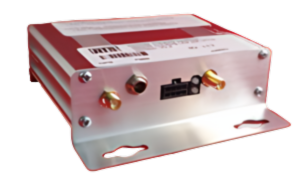
Fleet tracker with alerting LEDs and buzzer, plus a CAN/J1939 vehicle interface.
PACER
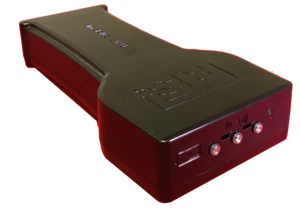
Battery-powered tracker with SOS button and accelerometer-based driver behavior alerting.
How RTS Solves It
Every human-driven vehicle is tracked
RTS GNSS trackers are fitted to human-driven vehicles and ground support equipment sharing the surface with robotic traffic.
Live positions feed the robot control system
Position data streams into the robot control software the facility already runs, so its collision avoidance logic sees traffic beyond its own sensor view.
Alerting for human drivers
The tracker in the vehicle alerts the driver directly, a safety layer that runs alongside the control system integration.
A shared position record
Positions from the tracked fleet are recorded on one timeline, so post-incident review covers the human-driven side instead of relying on statements.
Where This Applies
RTS deploys as a standalone platform or integrates into your existing systems. The same solution scales across sectors, adapting to your infrastructure, regulatory environment, and operational requirements.
- Automotive Proving Grounds: Robotically driven and human-driven vehicles share the same test surfaces. The robot control layer receives live positions for the manned traffic around it.
- Surface Mining: Robotic haulage runs mixed fleets in production mines. Feeding manned light vehicle and equipment positions into the control layer covers the interactions its sensors have not seen.
- Seaports: Automated terminals run robotic container movers alongside manned trucks and service vehicles. The automated fleet gets live positions for the manned traffic sharing its lanes.
Solve Mixed Traffic Durability Testing on your site
Talk to our team about your environment, fleet, and constraints. We will scope a working solution with you.
Contact Us