
Surface Mining
Proximity detection and collision avoidance for surface mining operations
Blind areas around the largest machines hide vehicles and people from the operator
A working pit mixes loaded haul trucks with graders, dozers, light vehicles, blast crews, surveyors, and contractors, through shift changes, dust, and night operations. The operators of the largest machines see the least: mirrors and cameras cover part of the surroundings, and a pickup or a person inside a blind area is invisible from the cab.
The controls holding that together are radio calls, spotters, and standoff rules, and they depend on every person following them every time. Nothing verifies compliance while it matters, contractor accountability lives on paper, and when a close call happens there is no shared record of who was where.
RTS closes that gap by tracking every vehicle and every person on the pit floor, predicting conflicts before they become contacts, and alerting the operator, the pedestrian, and the control room at the same time.
Blind areas around large equipment
Mirrors and cameras cover part of the machine's surroundings. A pickup or a pedestrian inside a blind area cannot be seen from the cab, no matter how careful the operator is.
Procedures without verification
Radio protocols, spotters, and standoff distances depend on people following them every time. Nothing confirms compliance, and nothing catches the one time it slips.
Near misses leave no record
Without position data, a close call between a truck and a pedestrian is a verbal report at best. Safety teams cannot fix haul road conflicts they cannot see.
The Site Awareness Platform
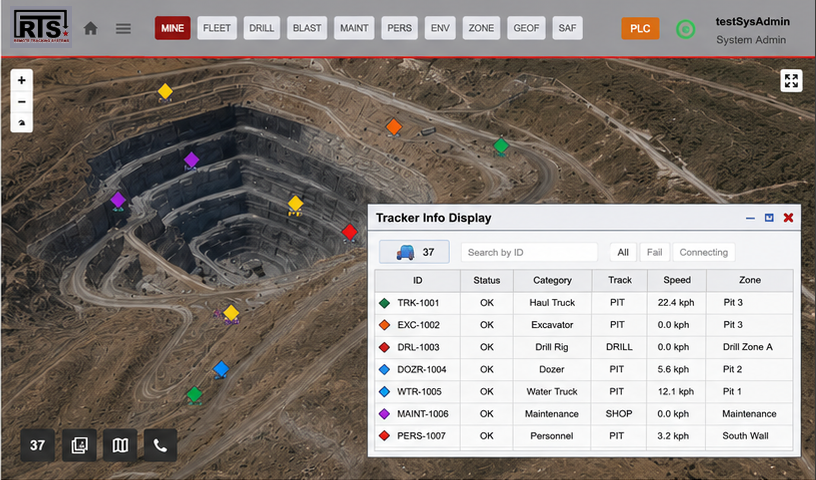
The Site Awareness Platform covers the blind areas: RTS trackers on every machine and person on the pit floor, and vMonitor predicting conflicts and alerting the operator, the pedestrian, and the control room before contact.
Aligned to the EMESRT vehicle interaction framework at Level 7 (operator awareness) and Level 8 (advisory alerting), without requiring integration into machine braking or propulsion. MSHA's 30 CFR 56.23003 requires US surface mine operators to identify and evaluate feasible safety technologies, including collision-avoidance and collision-warning systems, as part of a written safety program (Subpart T, compliance date July 17, 2024).
How the Platform Fits
A dynamic safety zone around every machine
vMonitor builds a protection zone around each tracked vehicle that grows and shrinks with speed and vehicle type. A haul truck at speed carries a larger zone than a parked light vehicle.
Conflict prediction before contact
The platform calculates time to collision, closest point of approach, and closing speed between converging equipment, then warns with a clock position callout such as "Truck at 2 o'clock."
Alerts where they matter, in the cab and on the person
Operators get warnings on the in-cab display. People on foot carry a tracker that vibrates and sounds a buzzer when a machine closes on their position. Vehicle-to-vehicle RF keeps proximity alerting running if the server connection drops.
Every near miss logged and replayable
Position histories are recorded, so safety teams can reconstruct close calls with Incident Replay, spot recurring conflict points, and correct traffic patterns before an incident.
Use Cases
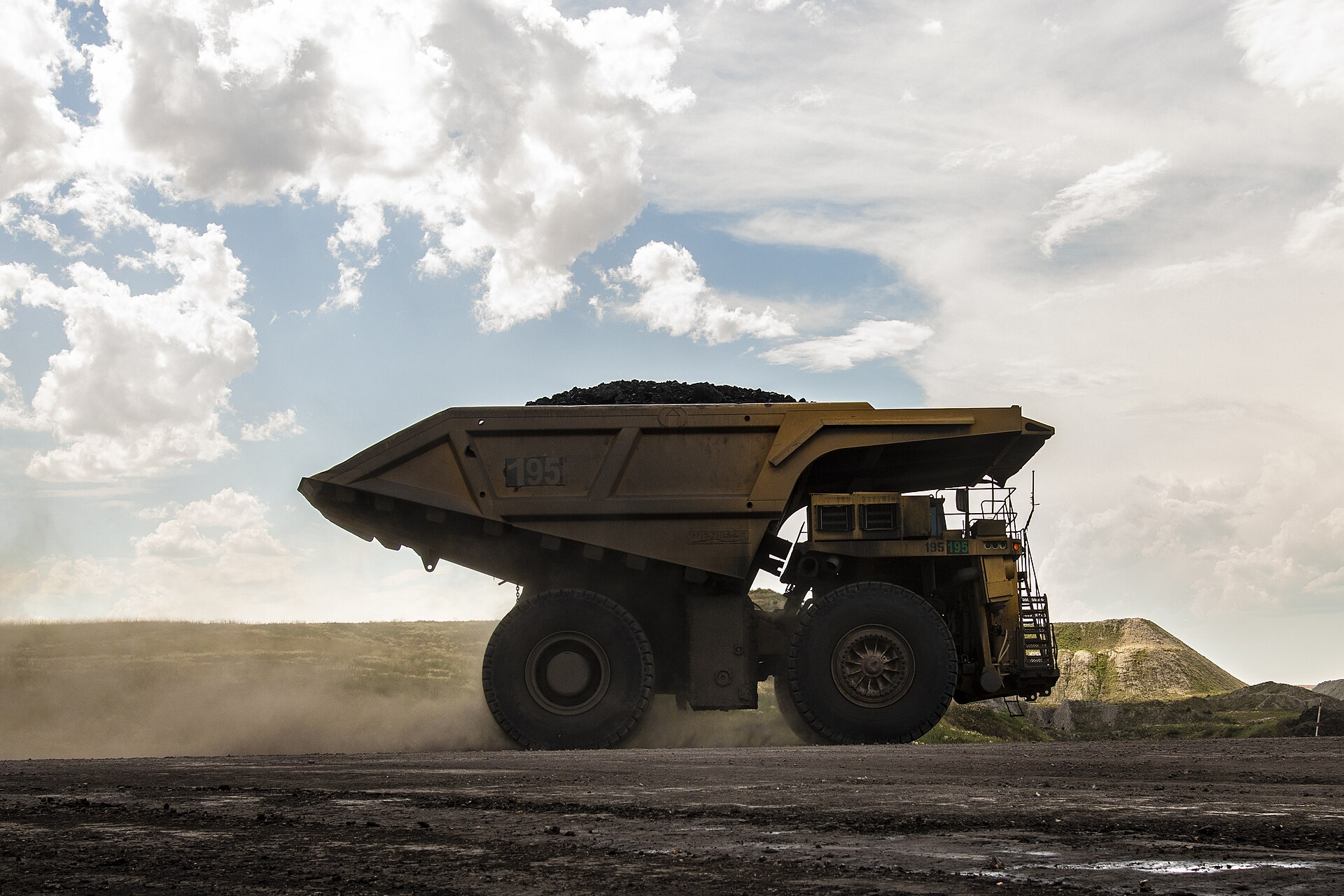
Heavy Equipment Collision Avoidance
How dynamic zones, conflict prediction, and pedestrian alerting come together on a working pit floor.
Read the Use Case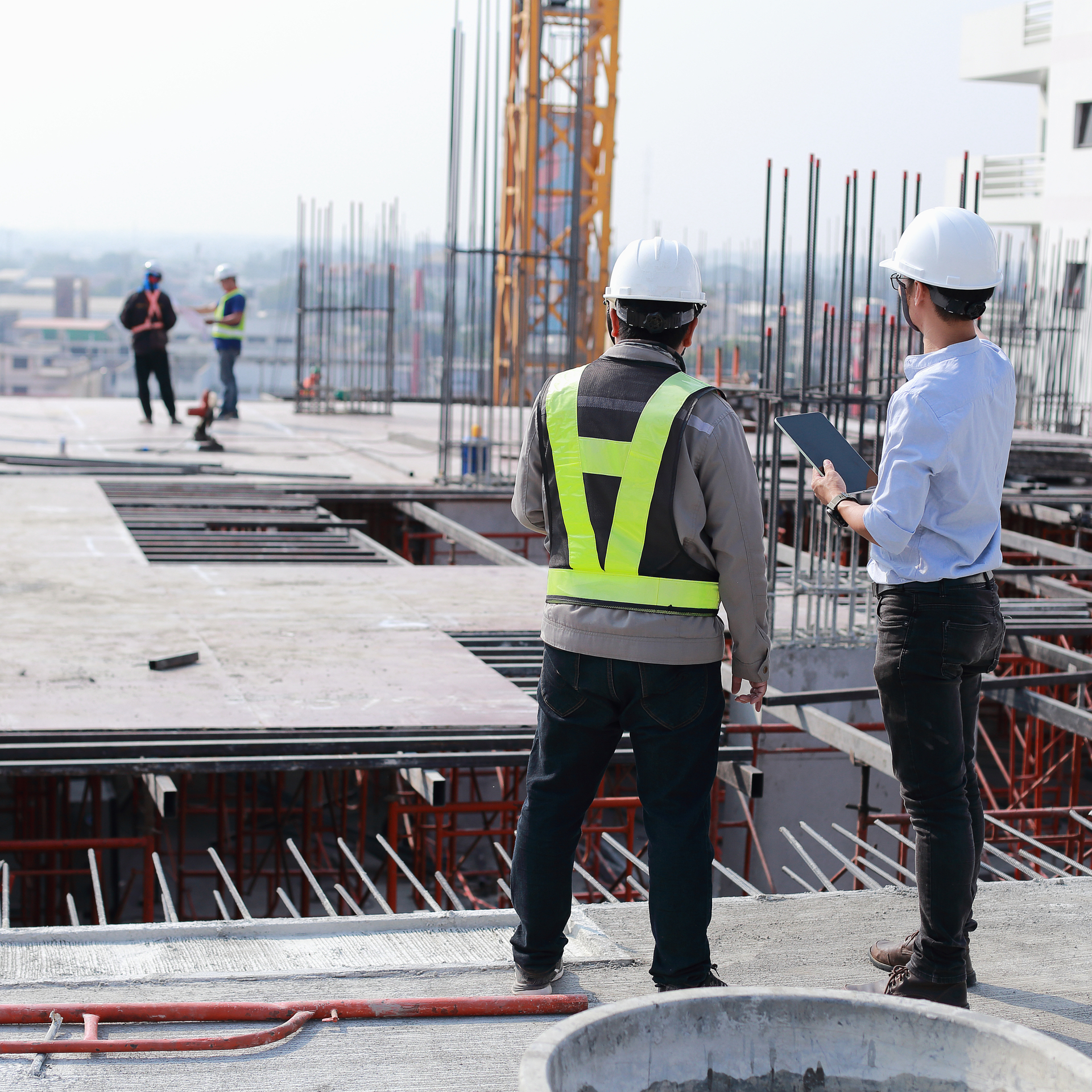
Contractor Tracking
Live contractor location, work-area accountability, and defensible access records.
Read the Use CaseReady to enhance your operations?
Contact us today to learn more about our Surface Mining and how they can benefit your organization.
Contact Us