
Winter & Seasonal Operations
Storm shift coordination, verified coverage, and fleet health for snow and ice operations
A storm shift runs on radios and leaves no record
A storm shift puts your own plows, contract crews, and de-icing units on the same surfaces at the same time, in the worst visibility of the year. Dispatch is coordinating by radio, and nobody has one picture of who is where.
Then the storm passes and the paperwork starts. Which surfaces were treated, and when? Which passes does the contractor bill for? When a slip-and-fall claim or an aircraft damage claim arrives weeks later, the answer has to come from something better than a driver's memory.
RTS puts every vehicle and crew on one live map during the storm, and turns the shift into a timestamped record afterward: which surfaces were treated, when, and by whom, exportable per site and per customer.
Crews you cannot see
Your plows, contract teams, and sidewalk crews work the same storm with no shared picture. Coordination happens over the radio, and gaps go unnoticed until someone reports them.
Billing and claims come down to memory
Per-pass billing disputes and slip-and-fall or aircraft damage claims arrive weeks after the storm. Paper logs and recollection do not settle them.
A breakdown in mid-storm
Fault codes and engine hours are invisible until a machine dies in the middle of a shift and takes a lane of the storm plan with it.
What RTS Provides
A full platform deployment: vMonitor as the alerting engine and user interface, with RTS hardware on the storm fleet.
RTS Trackers
In-Vehicle Tablet (IVT)
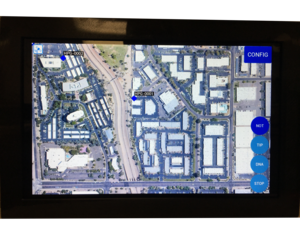
Driver display in the cab. The alert triggers where the driver can see and hear it, at the same moment the operations center does.
Vehicle Tracking Unit (VTU)
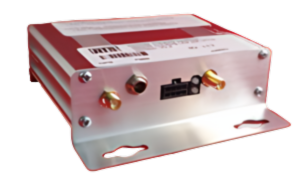
Fleet tracker with alerting LEDs and buzzer. Adds a CAN/J1939 interface for fault codes, fuel levels, and diagnostics.
Personnel Tracking Unit (PTU)
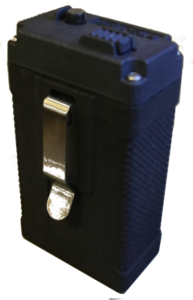
Compact tracker for people on foot, with SOS button, vibration, and buzzer alerting.
Mobile Tracking Application
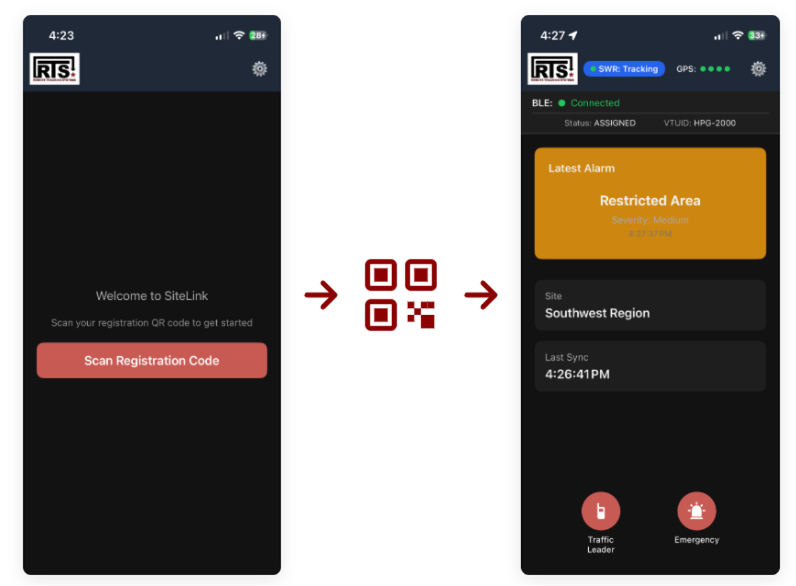
Phone-based tracking with QR code onboarding. Pairs with a vehicle's tracker over Bluetooth, and falls back to the phone's own GPS on foot.
vMonitor · Alerting Engine + User Interface
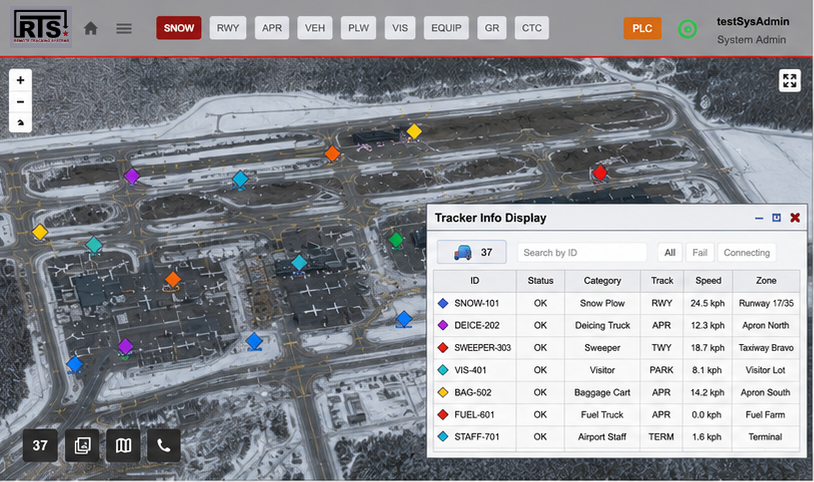
RTS Trackers
In-Vehicle Tablet (IVT)
Driver display in the cab. The alert triggers where the driver can see and hear it, at the same moment the operations center does.
Vehicle Tracking Unit (VTU)
Fleet tracker with alerting LEDs and buzzer. Adds a CAN/J1939 interface for fault codes, fuel levels, and diagnostics.
Personnel Tracking Unit (PTU)
Compact tracker for people on foot, with SOS button, vibration, and buzzer alerting.
Mobile Tracking Application
Phone-based tracking with QR code onboarding. Pairs with a vehicle's tracker over Bluetooth, and falls back to the phone's own GPS on foot.
vMonitor · Alerting Engine + User Interface
The alerting engine is aligned to FAA AC 150/5210-25A, the FAA's performance specification for airport vehicle runway incursion warning systems.
How RTS Solves It
One live picture of the storm
Every plow, de-icer, loader, and crew on foot on one map, your own fleet and contract teams alike. Dispatch sees the whole storm plan moving in real time.
Coverage and pass verification
The platform records area coverage and passes as they happen, so treated surfaces are verified during the shift instead of reconstructed after it.
Vehicle health off the CAN bus
Engine hours, diagnostics, and fault codes come off the vehicle bus over CAN/J1939, with fault alerts during the shift and the data maintenance planning needs between storms.
Incident Replay that settles disputes
Incident Replay reconstructs a slip-and-fall claim, an aircraft damage claim, or a coverage dispute exactly as it happened, and lets crews debrief storm shifts on routes and passes.
Where This Applies
RTS deploys as a standalone platform or integrates into your existing systems. The same solution scales across sectors, adapting to your infrastructure, regulatory environment, and operational requirements.
- Airports & Airfields: Plows, brooms, and de-icing units work movement areas in the worst visibility of the year, with the same movement area alerting active through the storm.
- Contract Snow Removal: Crews work multiple customer sites in one storm. Per-site, per-customer reports document coverage for billing, and the same record defends against liability claims.
- Proving Grounds: Winter test programs depend on prepared surfaces. Plow and treatment passes are recorded per track, so test teams know the state of a surface before a run.
Solve Winter & Seasonal Operations on your site
Talk to our team about your environment, fleet, and constraints. We will scope a working solution with you.
Contact Us